Generative AI
AI technology is evolving rapidly, and business use cases are exploding.
In addition to the new opportunities being created, the technology’s rapid advancement is expected to displace many jobs by improving productivity and reducing the need for skilled workers, including STEM professionals (e.g., software developers, data analysts, research scientists, and engineers). We are already seeing the rise of new regulatory frameworks to govern its use.
That said, as AI engineers, we get to be excited by these changes, since we’ll be riding this technological wave of innovation.
I find this quote to be increasingly relevant in the age of AI:
“Once a new technology rolls over you, if you’re not part of the steamroller, you’re part of the road.”
– Stewart Brand
Let’s take a look at some applications of AI that are having the biggest impact right now.
Generative AI
Generative AI has been a transformative force in the field of artificial intelligence, enabling new ways to create, automate, and innovate.
However, it also presents significant concerns. The technology raises ethical questions about copyright and intellectual property rights, as AI models are trained on existing works. There are also concerns about the potential misuse of these tools for creating deepfakes, spreading misinformation, or automating malicious content.
This Lesson Will Cover
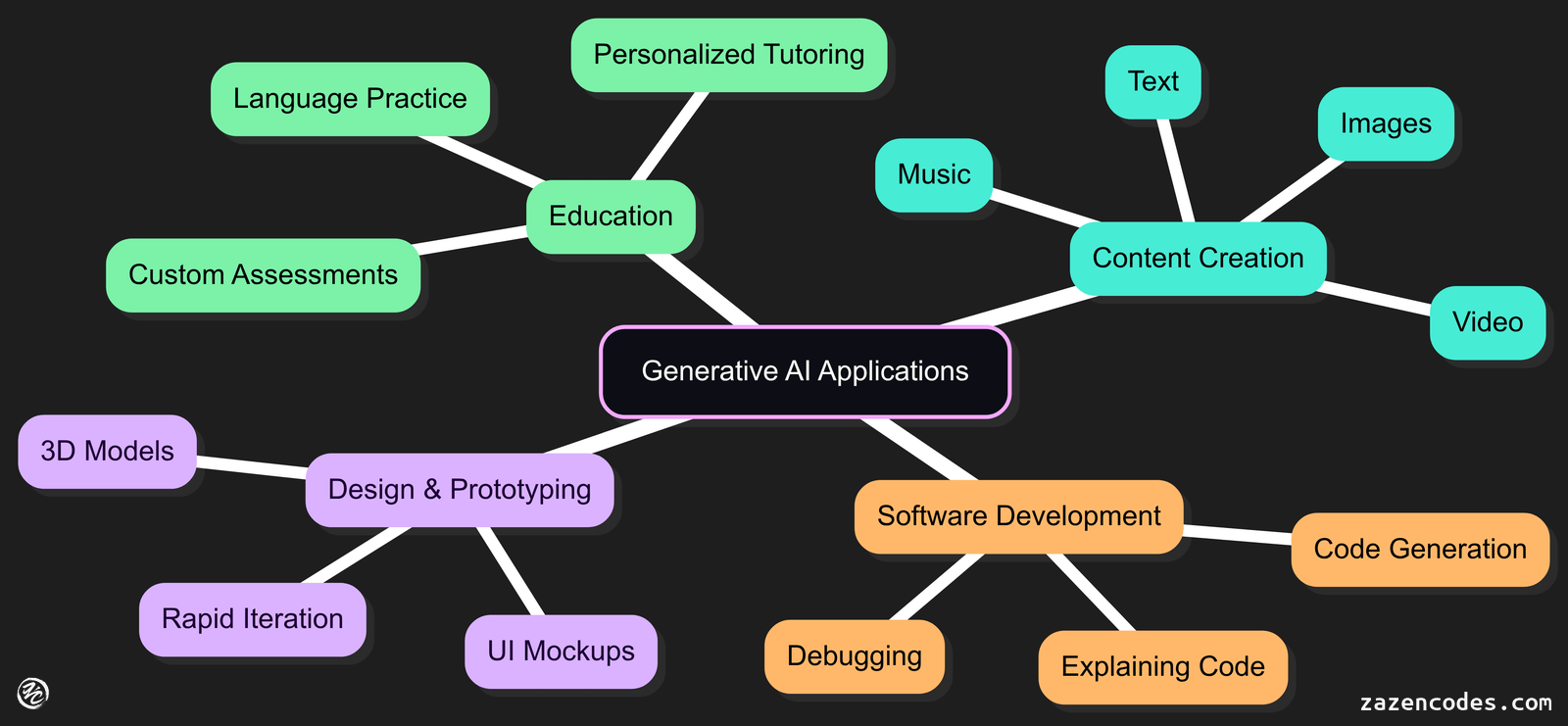
- 🤖 Capabilities of generative AI
- 🎨 Applications in content creation and creative work
- 🛠️ Software development automation tools and impacts
- 🏗️ Design and prototyping use cases
- 📚 Educational applications and implications
What is Generative AI?
Generative AI refers to systems capable of producing content like text, images, code, music, and datasets. Its applications are reshaping industries and lowering barriers for creativity and technical innovation.
Content Creation and Creative Work
Creative fields like art, writing, music, and video production are being revolutionized by generative AI. Tools like OpenAI’s GPT, DALL·E, and Stable Diffusion allow individuals with little or no training to produce high-quality content cheaply and quickly.
Consider a few examples:
- Blog Writing: Models like GPT can draft articles, generate ideas, and optimize SEO strategies.
- Art Generation: AI tools allow non-artists to create stunning visuals simply by describing what they envision.
- Video Editing: AI-powered tools can automatically edit footage and add effects, music, and transitions.
While these applications are still lacking in some respects compared to human experts, keep in mind that they are continuing to improve. We should expect them to eventually match human capabilities. For example, writing that mimics individual styles more closely or art generation that produces consistent characters without abnormalities (e.g., too many fingers).
Software Development Automation
As we all know, generative AI’s capabilities extend beyond writing to optimizing and debugging code. This has dramatically improved developer productivity and lowered the barrier to creating apps.
Here are some popular tools (as of 2025) that have emerged for this task:
| Tool | Description |
|---|---|
| GitHub Copilot | AI-powered code completion that suggests whole lines or blocks of code as you type |
| Cursor IDE | Code editor with built-in AI capabilities for code generation and explanation |
| Vercel AI | AI SDK and runtime for building AI-powered applications with React and Next.js |
On one hand, AI-generated code has enabled engineers to focus on solving more complex problems. But on the other hand, it’s devaluing the skills required to be a programmer.
Design and Prototyping
Generative AI helps teams explore design alternatives before committing to production work.
- Visual Concepts: Generate variations of a product concept, layout or illustration to compare possible directions.
- Interface Prototypes: Turn a sketch or written brief into an initial interface, then refine its structure and interactions.
- Iteration: Use feedback to adjust the prototype and test it with the people who will use the product.
Generated concepts still need review for usability, accessibility and feasibility. A useful prototype gives us something concrete to evaluate; it does not establish that the design is ready to ship.
Educational Applications
Generative AI is also a powerful tool in education, providing tailored resources and personalized learning experiences.
- Custom Content: AI can create quizzes, summaries, and study guides based on specific learning objectives.
- Tutoring: Virtual tutors powered by AI models deliver real-time, personalized assistance to learners, regardless of location.
- Language Learning: Systems like ChatGPT or Bard simulate natural conversations in multiple languages, making language practice engaging and interactive.
These applications promote inclusive education by addressing diverse learning styles and breaking down barriers to access. They also (you guessed it) will gradually lower the demand for teaching professions.
Conclusion
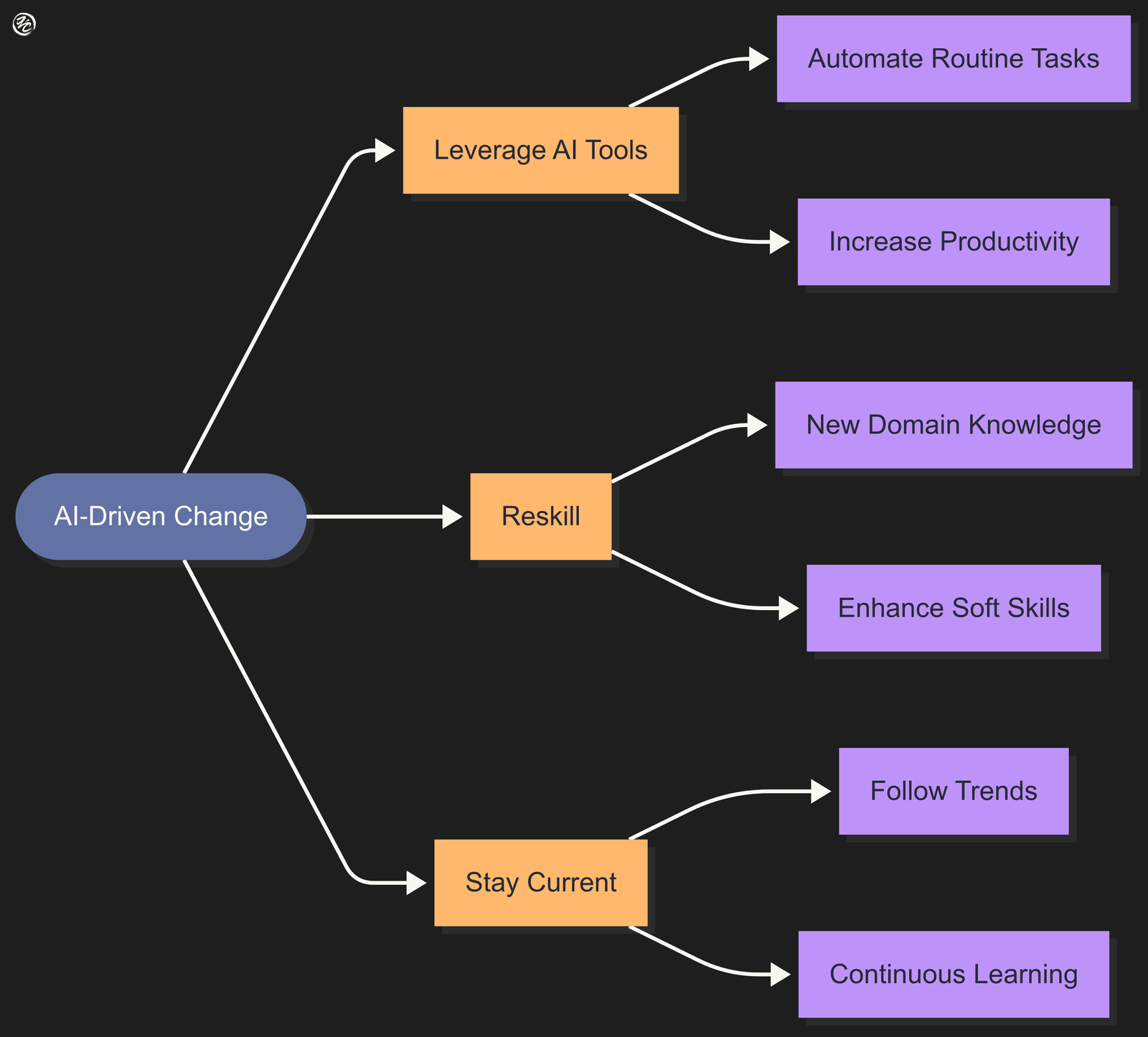
This lesson was a bit of a bummer. I want to emphasize here that we don’t know exactly how the future will unfold. However, the writing is on the wall for AI, so we know that humans will be forced to adapt. But luckily, we are masters of adaptation.
Key Takeaways
🤖 Generative AI is transforming multiple industries by enabling automated content creation and lowering technical barriers.
🎨 Key applications include content creation, software development, design/prototyping, and education.
⚖️ While the technology creates new opportunities, it also raises concerns about job displacement and ethical issues.
🛠️ Current tools like GitHub Copilot, DALL·E, and AI-powered design tools are already impacting professional workflows.
🚀 The technology continues to improve and will likely match human capabilities in many domains.
🔄 Adaptation to AI-driven changes will be crucial for professionals across industries.
Next: AI for Enhanced Productivity
AI represents a significant driver of productivity and, therefore, I believe it will also drive economic growth. In the next section, we’ll explore some of the productivity gains we’re already seeing in the workplace.
Comments (0)
No comments yet.