Modern Data Pipelines
Let’s learn about the general categories of data pipelines that exist.
This Lesson Will Cover
- 🔄 ETL vs ELT pipelines and their use cases
- ⏳ Real-time vs batch processing approaches
- 🎯 Criteria for choosing the right data pipeline architecture
- 🛠️ Common technologies used in modern data pipelines
ETL vs ELT
ETL (Extract, Transform, Load)
ETL is the traditional approach to data pipelines. It processes data in three steps:
- Extract: Data is pulled from source systems (e.g., databases, APIs, or flat files).
- Transform: The data is cleaned, formatted, and enriched—typically before storing it in the target system.
- Load: The transformed data is loaded into a target database or data warehouse.
ELT (Extract, Load, Transform)
ELT is a modern alternative, particularly suited to cloud-based data warehouses. It reverses the last two steps:
- Extract: Data is pulled from the source systems.
- Load: Raw data is stored directly in a scalable system, such as a cloud-based data lake or warehouse.
- Transform: Data is transformed within the target system using its native processing capabilities.
When to use ETL vs ELT
ETL became the standard in the 1970s when storage was expensive and computing resources were limited. Organizations needed to transform and filter data before loading it to minimize storage costs and ensure efficient processing.
ELT has gained popularity with the rise of cloud computing and cheap storage. Modern data warehouses can store massive amounts of raw data inexpensively and perform transformations using powerful distributed computing resources. This allows for more flexible analysis.
ETL Examples:
- Financial reporting that need precise data formatting
- Healthcare with strict data privacy requirements (sensitive data is transformed before storage)
- Legacy integration where data must conform to specific formats
ELT Examples:
- Marketing analytics systems that require flexible data transformation for different insights
- Scientific research platforms that need to preserve raw data for various analyses
- Data lakes storing customer interaction data for multiple analysis purposes
Real-Time vs Batch Processing
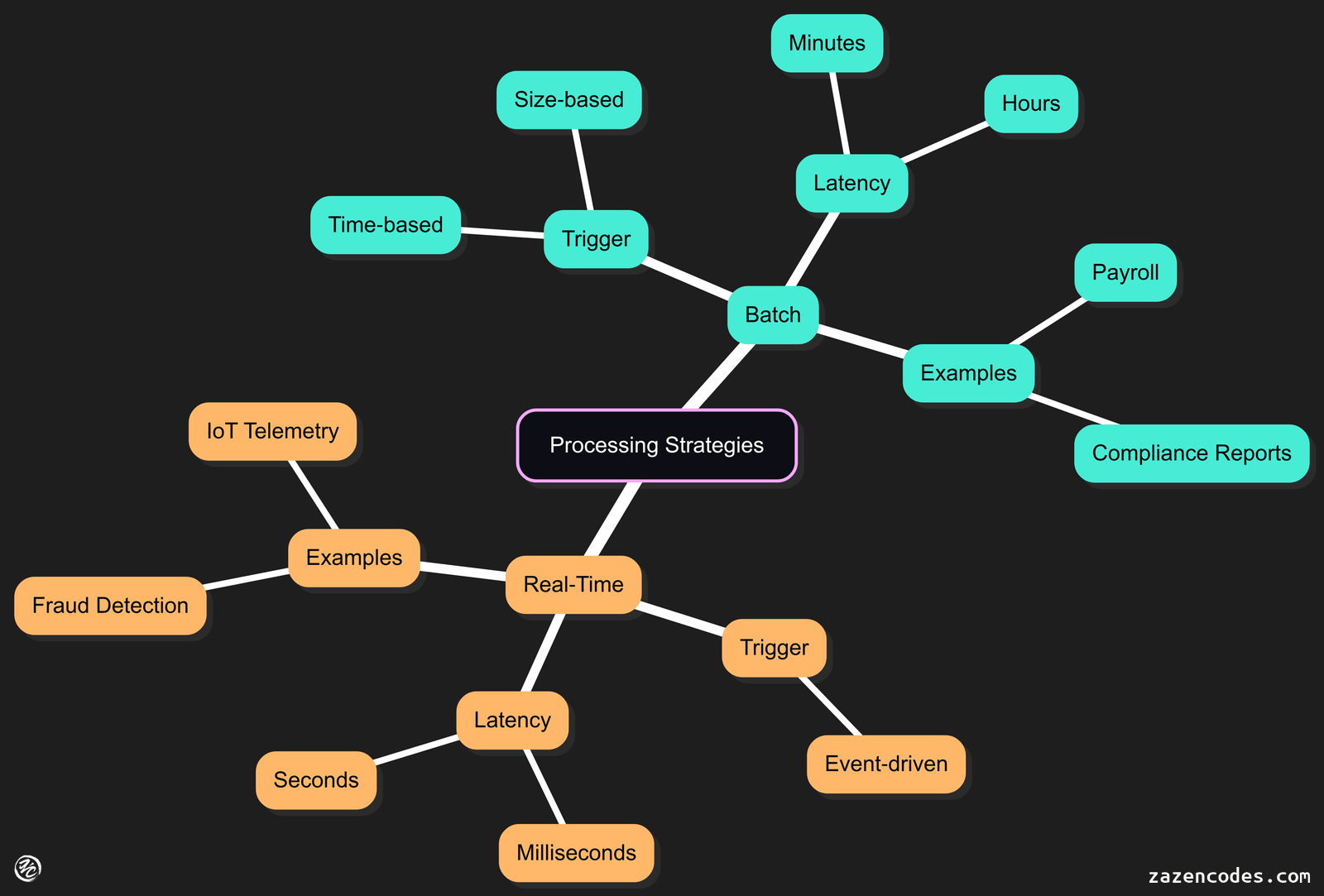
Batch Processing
Batch processing involves the use of “batches” to handle data in scheduled intervals, processing (potentially) large volumes of data in manageable batches.
Example Use Case
Generating daily sales reports for a retail company.
Steps:
- Collect all transactions for the day.
- Transform the data to calculate key metrics, like revenue and profit margins.
- Load the results into a reporting dashboard.
Real-Time Processing
Real-time (or streaming) processing handles data as it arrives, providing immediate processing and analysis for time-sensitive applications.
Example Use Case
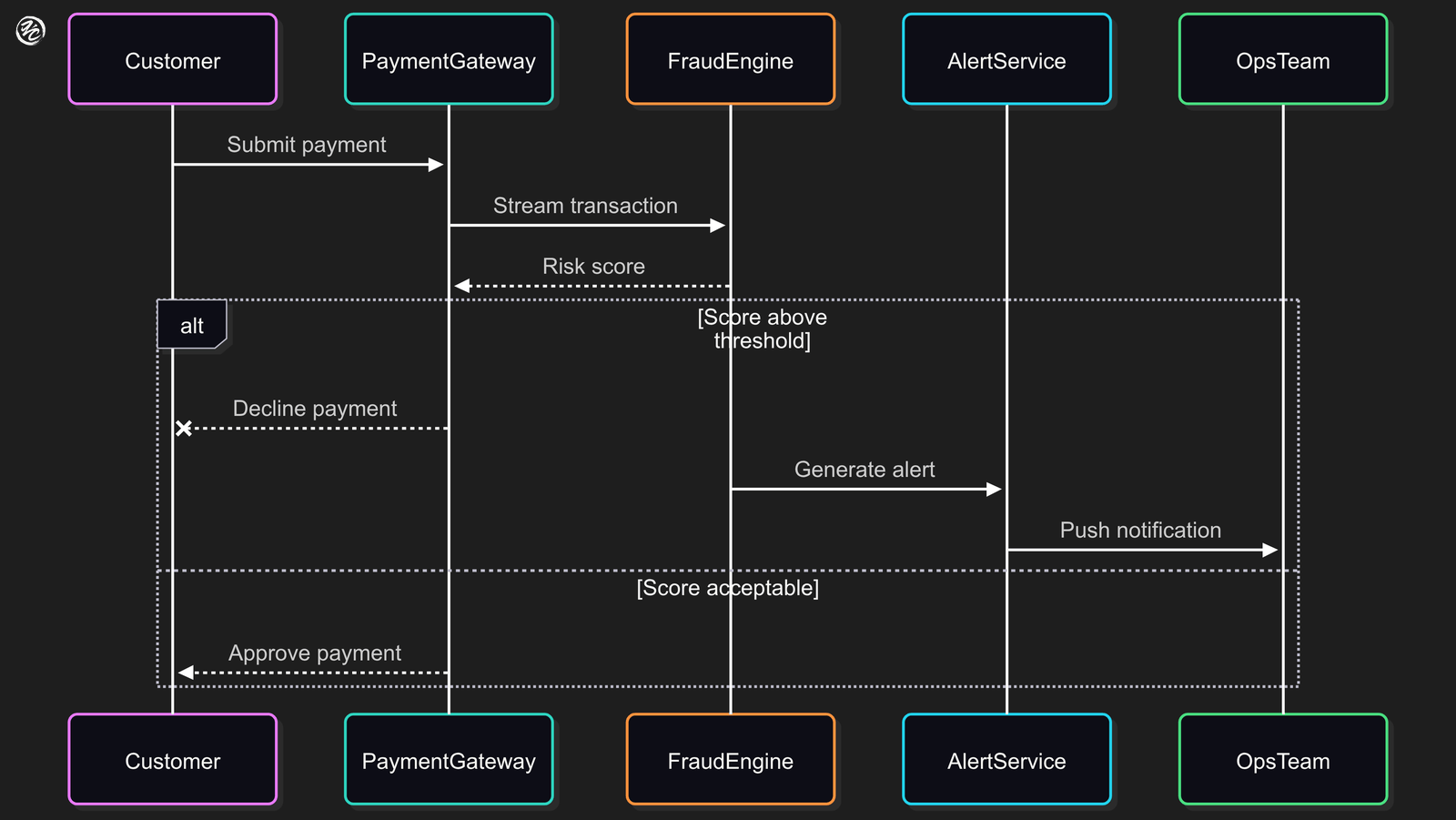
Fraud detection for an online payment system.
Steps:
- Monitor transactions in real time.
- Analyze each transaction for patterns of fraudulent behavior (e.g., unusual locations or amounts).
- Flag suspicious transactions immediately for further investigation.
Choosing the Right Approach
The choice between ETL/ELT and real-time/batch processing depends on the problem you’re solving.
Here’s a quick comparison:
| Criteria | ETL | ELT | Batch | Real-Time |
|---|---|---|---|---|
| Data Volume | Medium | Large | Large | Small to Medium |
| Latency Needs | Low | High | Low | High |
| Flexibility | Low | High | Moderate | High |
| Tech Stack | Traditional Databases | Cloud Warehouses | Hadoop, Spark | Kafka, Flink |
Conclusion
Discussing the nuances of this terminology brings to mind job titles, in the sense that it doesn’t really matter what you’re called, as long as you’re getting the job done.
Key Takeaways
🔄 ETL is traditional and better for strict data requirements, while ELT offers more flexibility with modern cloud infrastructure.
⏳ Batch processing handles large volumes of data at scheduled intervals, while real-time processing provides immediate analysis.
⚖️ The choice between pipeline architectures depends on factors like data volume, latency needs, and flexibility requirements.
☁️ Modern data pipelines leverage cloud technologies and distributed computing for scalable processing.
Next: Data Transformation
Next up we’re talking about data transformations and looking at a whole bunch of SQL.
Comments (0)
No comments yet.